 Loading... Please wait...
-
Call us on (973) 810-2976
- My Account
- Gift Certificates
- Items / $0.00

All prices are in All prices are in USD
Categories
- Home
- Artillery related items
- Revolutionary War cannonball from the 1779 Battle of Trask’s Rock, Castine
- Home
- Identified Artifacts
- Revolutionary War cannonball from the 1779 Battle of Trask’s Rock, Castine
- Home
- Late 18th Century / Early 19th Century
- Revolutionary War cannonball from the 1779 Battle of Trask’s Rock, Castine
- Home
- Revolutionary War items
- Revolutionary War cannonball from the 1779 Battle of Trask’s Rock, Castine
- Home
- REVOLUTIONARY WAR ARTILLERY
- Revolutionary War cannonball from the 1779 Battle of Trask’s Rock, Castine
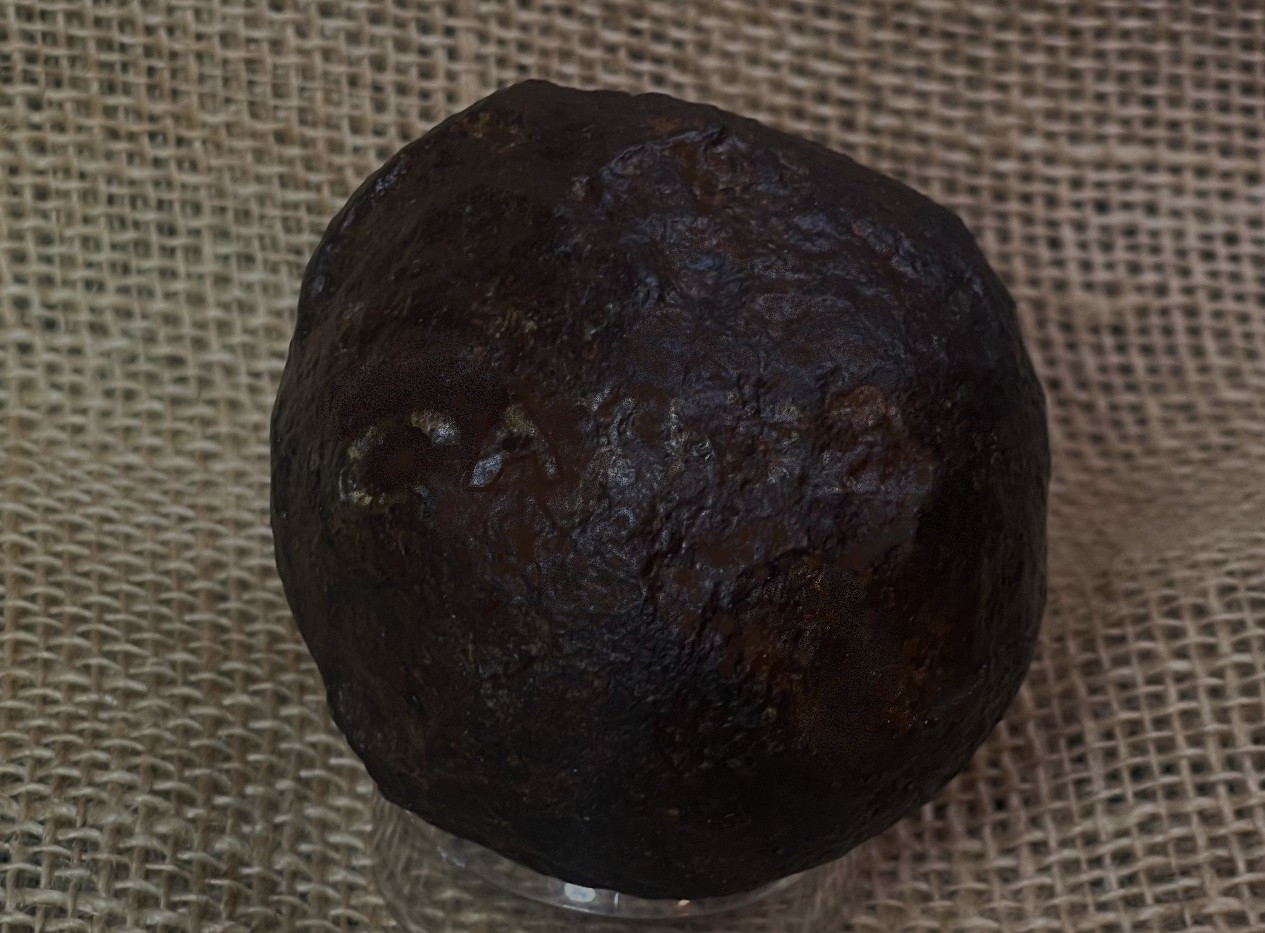


Revolutionary War cannonball from the 1779 Battle of Trask’s Rock, Castine

Product Description
Being offered is a Revolutionary War 3-pounder cannonball. It has a diameter of 2 ¾” and weighs 1-pound, 14-ounces. During the Revolution both sides made extensive use of artillery and 3-pounder cannons. Actually, there is one on display at the Fort Ticonderoga Museum (see pictures). This ball was recovered many years ago from the Battle of Trask’s Rock at Castine, Maine by the late Dean Thomas.
The expedition organized by the Americans in June 1779, to dislodge the British who had occupied the point where is now the town of Castine, Maine, as a base of supplies and a naval station. It has been known in history as the Bagaduce expedition, but at that time was called "The Expedition to the Penobscot." The arm of the sea now called Bagaduce River was in former times called Matchebiguatus, an Indian name meaning a place where there is no safe harbor. At the time of the Revolution it was known as Maja-Bagaduce, which was contracted into Bagaduce and hence the name of the expedition.
The site of the landing centers around a large granite boulder on the beach. It was named after Israel Trask, a 14-year-old American fifer boy. During the chaotic 20-minute firefight, Trask took shelter behind the boulder and continuously played his fife to boost the morale of the storming troops, reportedly never missing a note.
This ball shows its age, out of round, but a solid piece, and has been coated for preservation. It is a great relic from a famous Revolutionary War battle. With the 250th anniversary of the nation's founding this year, interest in the Revolutionary War and its relics are significantly increasing. This renewed enthusiasm is driving the demand for virtually all Revolutionary War artifacts, further contributing to their scarcity and rising prices.
Product Reviews
)