 Loading... Please wait...
-
Call us on (973) 810-2976
- My Account
- Gift Certificates
- Items / $0.00

All prices are in All prices are in USD
Categories
- Home
- Non-excavated Artifacts
- 18th century Tea Bowl, as found at Revolutionary sites and museums
- Home
- Personal Items
- 18th century Tea Bowl, as found at Revolutionary sites and museums
- Home
- Late 18th Century / Early 19th Century
- 18th century Tea Bowl, as found at Revolutionary sites and museums
- Home
- Revolutionary War items
- 18th century Tea Bowl, as found at Revolutionary sites and museums
- Home
- Antiques from the 18th and 19th century
- 18th century Tea Bowl, as found at Revolutionary sites and museums
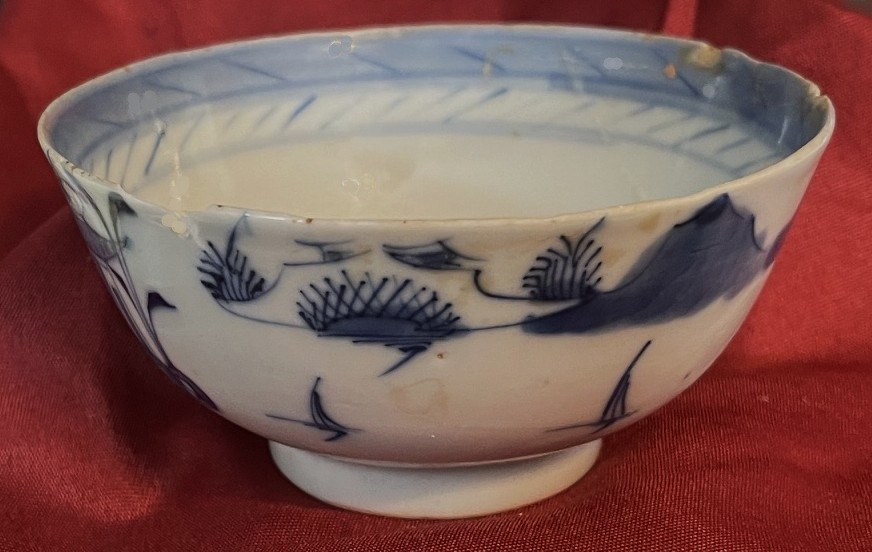


18th century Tea Bowl, as found at Revolutionary sites and museums

Product Description
Being offered is another beautiful 18th century tea cup (bowl). It has a diameter of 4 ¼” on top, 2” diameter on the bottom, and 2 ½” high. It is decorated with cobalt blue pigment on a white body, usually applied with a brush under the glaze.
In the 18th century, teacups evolved from handle-less "tea bowls" to the familiar, handled cups we know today, often made from porcelain imported from China or replicated by European manufacturers.
Into the 17th century, Chinese ceramics were being made specifically for European export and traded in large quantities. Until ceramic manufacturers in England and Europe began to master and successfully market their own porcelain. Chinese products held a mysterious fascination, prized for its superior quality, and the fashion for Chinese porcelain thrived.
There are examples in "Collector's Illustrated Encyclopedia of the American Revolution", by Neumann & Kravic (see pictures). There are similar examples of this tea bowl in the Colonial Williamsburg Museum and an excavated example at the Fort Ticonderoga Collection (see pictures).
Shards of these cups are often found at Revolutionary War sites, validating their use (see pictures). This cup is not in the best condition, it does have a few chips, and it appears that a crack was once repaired. However, for being over 200 years old, it has survived pretty well. It would make a great addition to a Colonial collection or even a softer touch to a Revolutionary War collection. It is kind of ironic, that one of the major causes of the Revolutionary War was over taxes on tea, i.e. “The Boston Tea Party”.
Product Reviews
)