 Loading... Please wait...
-
Call us on (973) 810-2976
- My Account
- Gift Certificates
- Items / $0.00
All prices are in All prices are in USD
Categories
- Home
- Identified Artifacts
- 18th Century American Tavern Noggin, as in books
- Home
- Non-excavated Artifacts
- 18th Century American Tavern Noggin, as in books
- Home
- Personal Items
- 18th Century American Tavern Noggin, as in books
- Home
- Late 18th Century / Early 19th Century
- 18th Century American Tavern Noggin, as in books
- Home
- Revolutionary War items
- 18th Century American Tavern Noggin, as in books
- Home
- Antiques from the 18th and 19th century
- 18th Century American Tavern Noggin, as in books


18th Century American Tavern Noggin, as in books

Product Description
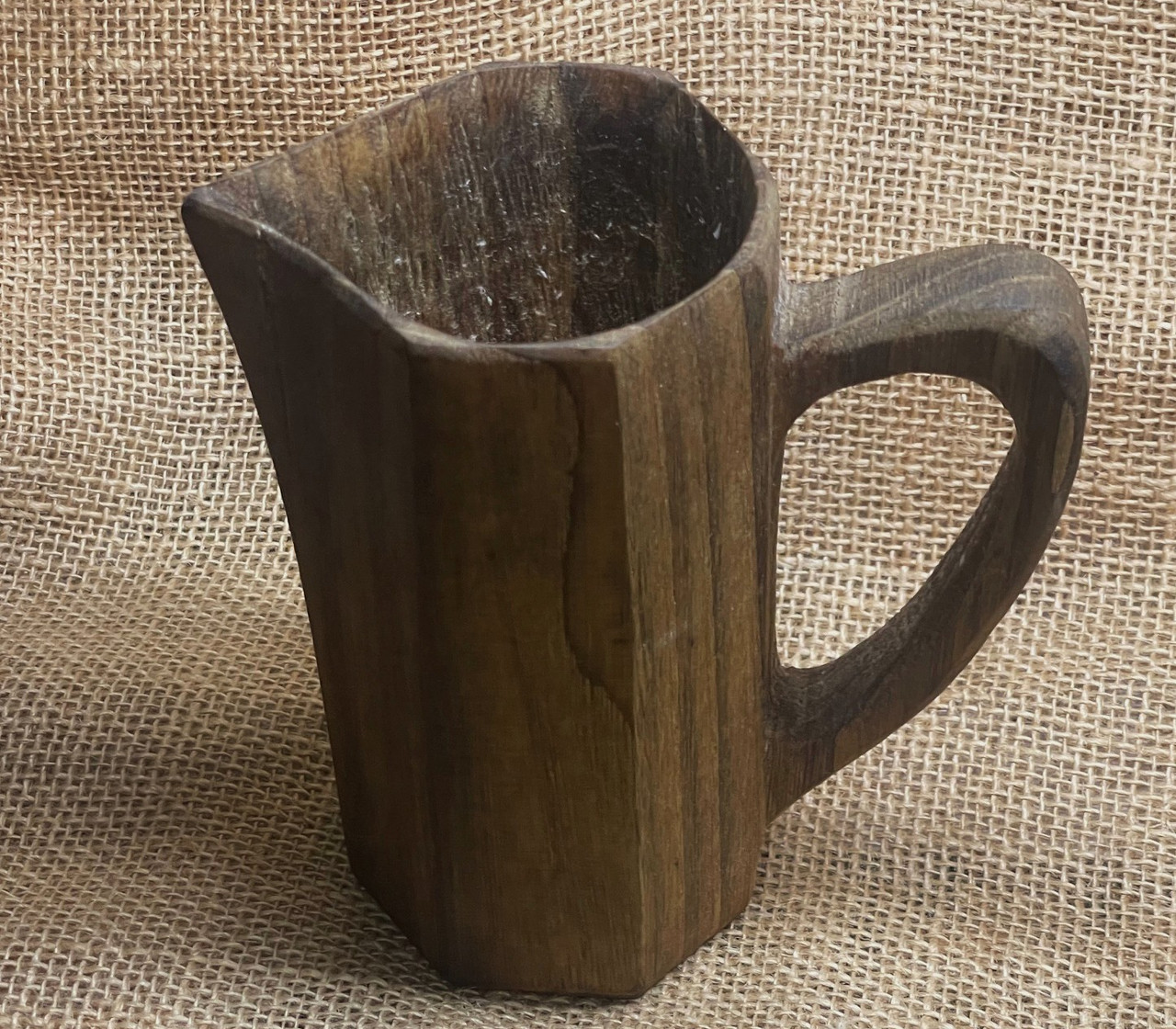
This is another nice piece offered; it is an 18th century hand-carved chestnut Tavern Noggin, having octagon panels and a pole lathe turned interior. It measures 5 3/4” tall with a 3” diameter opening. There is a museum or inventory number taped to bottom. While most were made of treen (small functional wooden items), they could also be crafted from pewter or copper.
In the 18th century, a noggin was a drinking vessel, typically a wooden mug or cup, often with a pouring lip, commonly used in taverns for serving individual portions of spirits, ale, or cider. The term served both as the name of the container and as a specific liquid measure, often equivalent to a gill (roughly a quarter-pint or 4–5 fluid ounces).
This 1700’s treen-ware example is very hard to find today with this great untouched condition and patina. There are no issues and it is rare to be made of chestnut wood. There are examples in “Collector’s Illustrated Encyclopedia of the American Revolution” by Neuman & Kravic (see pictures).
Revolutionary War soldiers heavily consumed alcohol, which was integrated into daily life and military rations, including beer, cider, rum, and whiskey. These drinks were often preferred over water, which was risky to consume, and soldiers averaged high consumption, sometimes leading to disciplinary issues. Rations included items like spruce beer, and alcohol played a key role in soldier morale and in taverns.
Throughout history, war has been a constant presence, shaping civilizations and societies. From the earliest days of humanity, conflict has persisted in various forms, and based on historical patterns, it is likely to continue in some manner. This ongoing reality has given rise to a deep fascination among historians and collectors who seek to understand the past through the tangible remnants left behind, i.e. uniforms, guns, swords, artillery.
While significant attention is given to weapons and military gear, the everyday items used by soldiers frequently go unnoticed. Simple objects like forks, spoons, cups, dishes, pots, and knives played an essential role in a soldier’s daily life. These items were as precious to the individual as their weapon, serving practical needs and providing comfort amidst the hardships of war. I myself have always appreciated their importance in showing a complete representation of a collection. Bob
Product Reviews
)