 Loading... Please wait...
-
Call us on (973) 810-2976
- My Account
- Gift Certificates
- Items / $0.00

All prices are in All prices are in USD
Categories
- Home
- Identified Artifacts
- 17th – 18th century Pipkin pottery cup with green and cream glaze, as in museums
- Home
- Personal Items
- 17th – 18th century Pipkin pottery cup with green and cream glaze, as in museums
- Home
- Late 18th Century / Early 19th Century
- 17th – 18th century Pipkin pottery cup with green and cream glaze, as in museums
- Home
- Revolutionary War items
- 17th – 18th century Pipkin pottery cup with green and cream glaze, as in museums
- Home
- Antiques from the 18th and 19th century
- 17th – 18th century Pipkin pottery cup with green and cream glaze, as in museums
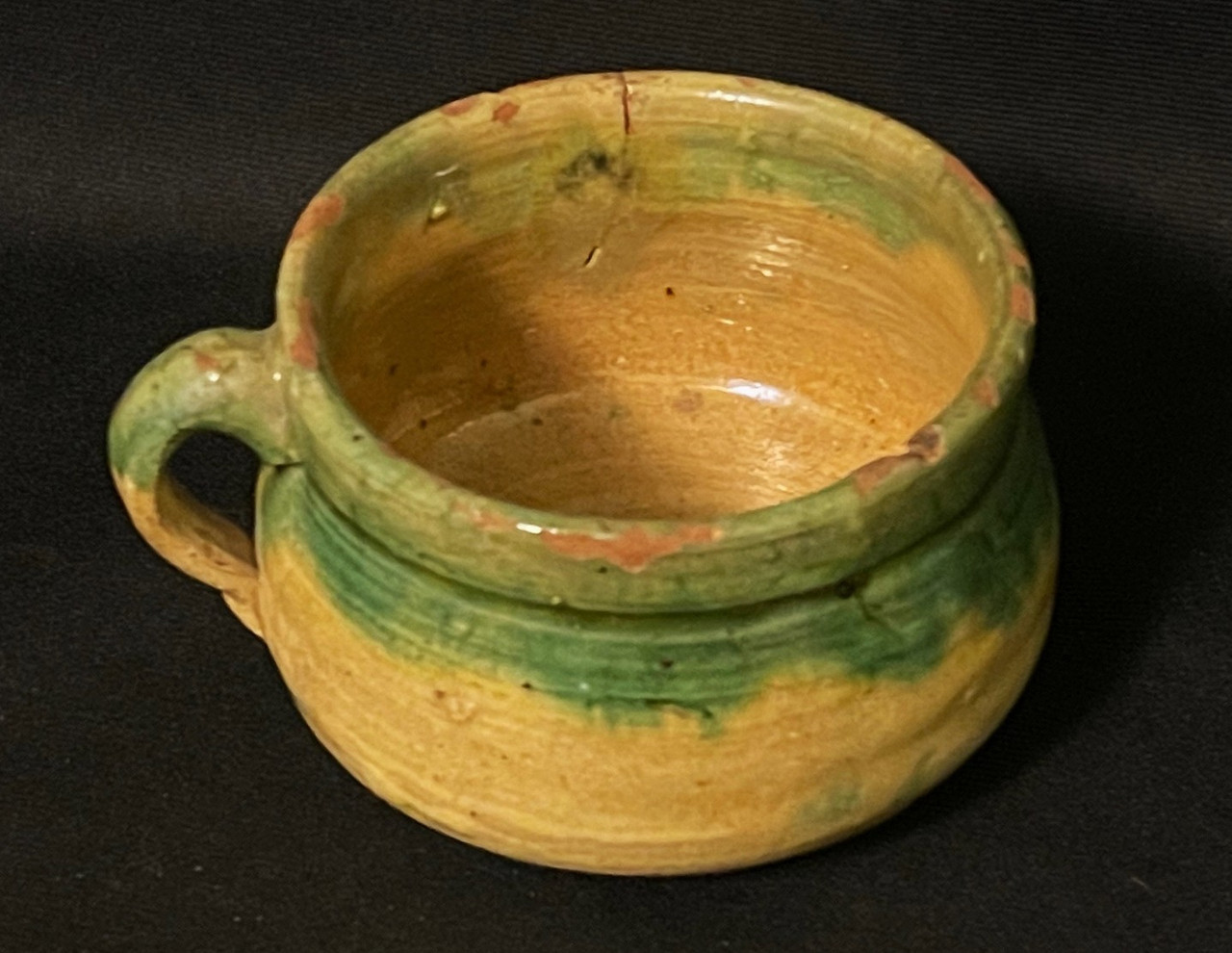


17th – 18th century Pipkin pottery cup with green and cream glaze, as in museums

Product Description
This is another rare piece being offered, a late17th century through early 18th century Pipkin, measuring 5” wide (including handle) and stands 3” high. It is a Dutch pottery cup with green glaze, often falling under the umbrella of Delftware (tin-glazed earthenware) or related stoneware. It features rich, iron-oxide-based green hues, combined with tan slips.
They were historically used for cooking over open fires or coals to simmer sauces, make gravies, melt butter, or cook small portions, acting like a medieval saucepan for heating liquids and foods slowly, not for direct flame. The handle helped with safe removal, making it a versatile staple in Colonial America and Europe.
This process was used on decorative items like puzzle jugs, vases, cups, and plates, showcasing the Dutch ability to mimic exotic wares and create distinctive, sometimes rustic, household ceramics.
While Delftware is famous for blue & white, these green glazed pieces show innovation, using iron (from ash or other sources) for earthy tones, making them collectible for their age and unique style.
There is an example of one of these cups in the Colonial Williamsburg Museum and remnants found at the Jamestown settlement (see pictures). The example here is in nice condition for its age, just having the typical chips and flaws; the color is beautiful.
Revolutionary War artifacts have always been difficult to find, and I am fortunate to have quite a few pieces in stock. With the upcoming of the 250th anniversary of the nation's founding next year, there will be a revitalized interest. Just about all Revolutionary War relics and artifacts will be in demand, which will only add to their scarcity and price. I am already seeing a substantial increase in purchases.
Throughout history, war has been a constant presence, shaping civilizations and societies. From the earliest days of humanity, conflict has persisted in various forms, and based on historical patterns, it is likely to continue in some manner. This ongoing reality has given rise to a deep fascination among historians and collectors who seek to understand the past through the tangible remnants left behind, i.e. uniforms, guns, swords, artillery.
While significant attention is given to weapons and military gear, the everyday items used by soldiers frequently go unnoticed. Simple objects like forks, spoons, cups, dishes, pots, and knives played an essential role in a soldier’s daily life. These items were as precious to the individual as their weapon, serving practical needs and providing comfort amidst the hardships of war. I myself have always appreciated their importance in showing a complete representation of a collection. Bob
Product Reviews
)